
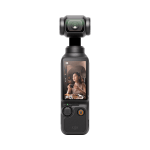

Most cameras get replaced or forgotten within a couple of years. The DJI Osmo Pocket 3 came out in late 2023, and it’s still the one people point to when they ask, “What’s the best small camera for video?” That says a lot.
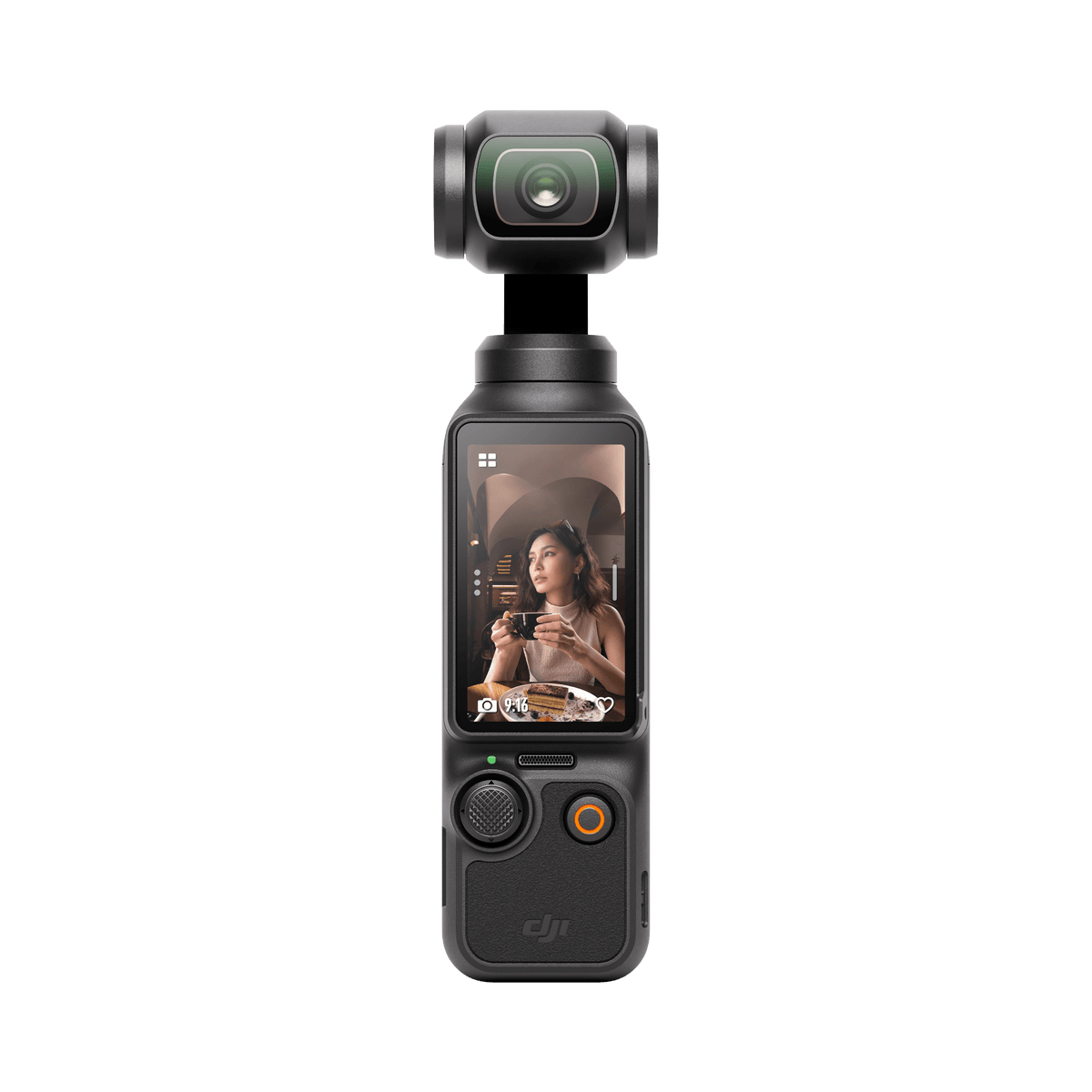
The idea is simple. Take a 1-inch camera sensor, mount it on a tiny motorized gimbal, add a screen you can twist sideways, and make the whole thing small enough to slip into a jacket pocket. What you get is footage that looks smooth and expensive without carrying anything that looks expensive.
The Short Version
If you want better video than your phone gives you and you don’t want to haul a camera bag, the Pocket 3 is the easiest recommendation in this category. The image quality and stabilization are excellent. The weak spots are audio, DJI’s walled-garden approach to accessories and the lack of any water resistance.
- What it gets right: buttery stabilization, strong low-light video, a rotating screen for vertical clips, quick charging, solid build
- What to know first: only DJI mics connect wirelessly, the built-in mic struggles in wind, it isn’t waterproof and the battery is sealed in
DJI Osmo Pocket 3 Specs at a Glance
- Sensor: 1-inch CMOS
- Video: up to 4K/60fps, 4K/120fps slow motion, 3K vertical
- Stabilization: three-axis mechanical gimbal
- Screen: 2-inch touchscreen that rotates 90 degrees
- Battery: rated up to 166 minutes at 1080p; about 16 minutes to reach 80%
- Weight: about 6 oz
- Price: $439 Standard Combo, $549 Creator Combo on DJI’s US store
Why People Love It
The stabilization is the whole point. Phones have gotten good at digital stabilization, but a real gimbal is still in a different league. Walk down a busy street, follow your kid across a park or film a hike, and the footage glides instead of bouncing. Tilt Lock mode keeps the horizon level even when you pan by hand, which is one of those small things you notice right away.
It handles dim light better than you’d expect. The jump to a 1-inch sensor was the big upgrade over the Pocket 2, and it shows up most at night. Restaurant dinners, campfires and city lights come out clean instead of muddy. Reviewers single out the Low Light mode as one of its best features.
Vertical video without the hassle. Twist the screen and the camera switches to vertical recording. If you post Shorts, Reels or TikToks alongside regular YouTube videos, you don’t need a second setup or any cropping.
Face tracking just works. Set it on a table or a mini tripod and it keeps you centered as you move around, even at a distance. For solo creators, that’s like having a camera operator who never gets tired.
The Trade-Offs
Audio is where the Pocket 3 shows its limits. The built-in mic sounds thin and picks up wind easily, so it’s fine for casual clips but not for anything where your voice matters. You’ll want an external mic, and here’s the catch: wireless mic support is limited to DJI’s own mics.
Battery life is decent but not endless. In published testing, it recorded about 113 minutes of 4K/60 video on a single charge. Recording 4K/60 continuously while sitting still indoors, it overheated after roughly 70 minutes, so long static sessions like recorded talks need breaks. Moving around helps it stay cooler.
It also isn’t built for water. There’s no water resistance at all, so kayaking, fishing from a boat or beach days with splashing are better left to an action camera. And since the battery is built in, you can’t swap a fresh one when it runs out.
Standard Combo or Creator Combo?
If you’re going to talk on camera at all, get the Creator Combo. The extra money buys a DJI Mic 2 transmitter, which fixes the audio problem, plus a battery handle, a wide-angle lens and a mini tripod. Buying those pieces separately later costs more than the difference between the two kits.
The Standard Combo makes sense if you mostly shoot travel B-roll, family moments or scenery where you don’t need clean voice audio.
Is the Osmo Pocket 3 Right for You?
It’s a great fit if you travel a lot, film your family, make YouTube videos from home or need a small second camera that’s quick to set up. Wedding and event shooters also use it as a discreet B-cam.
It’s probably not the right pick if you need waterproofing, want to use any brand of wireless mic, or shoot long, uninterrupted recordings in one spot.
Watch a Video Review
Final Thoughts
Plenty of companies have tried to beat the Osmo Pocket 3, and it’s still the one to beat. It turns everyday moments into smooth, good-looking video without making you feel like you’re running a film shoot. Add a decent mic and it covers almost everything a solo creator or traveler needs.
This review is based on manufacturer specifications and published hands-on testing. Prices are accurate as of November 2026 and may change. Product image courtesy of DJI.